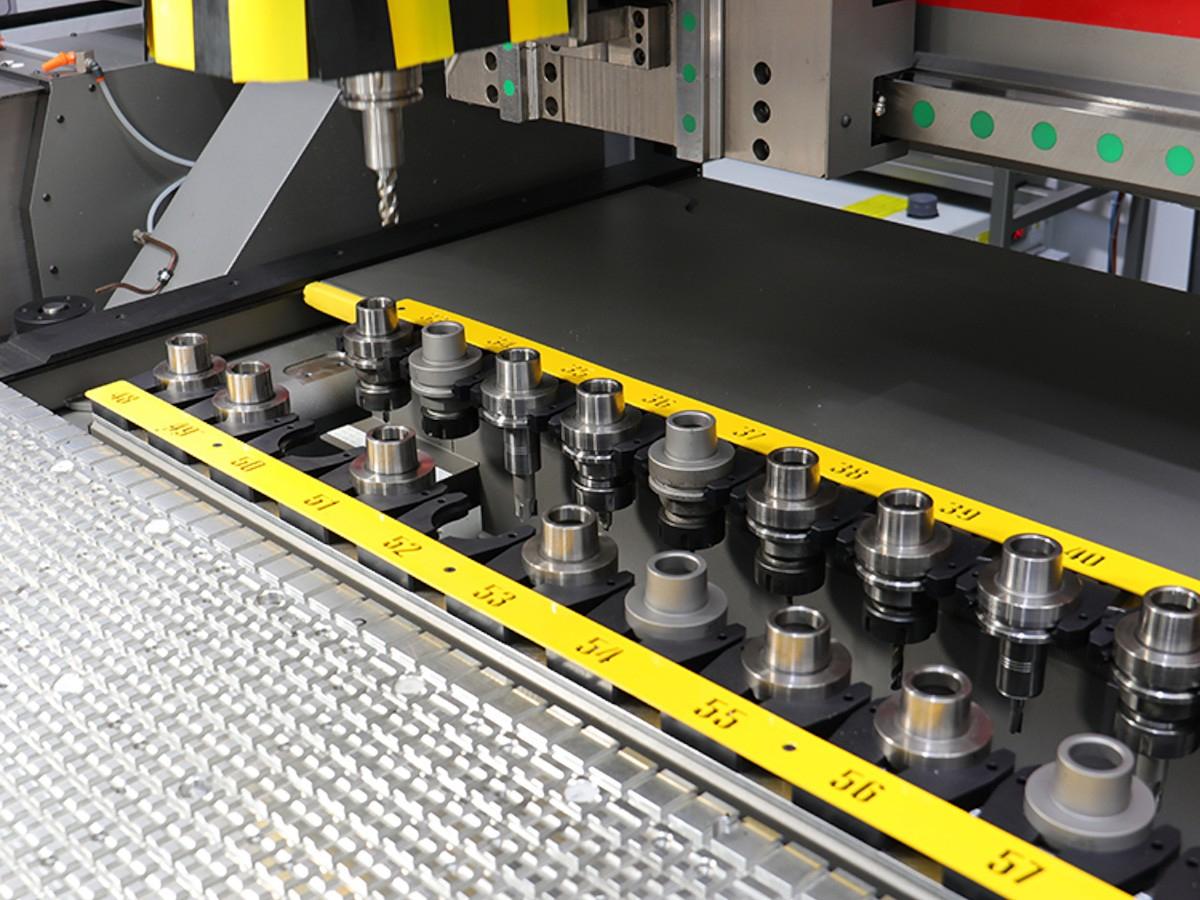
In modern manufacturing, CNC milling machines represent a fundamental technology for the production of high-precision components. The term Computer Numerical Control refers to automated systems capable of controlling tool movements via software, ensuring extremely accurate and repeatable results.
In recent years, interest in these machines has grown significantly, not only in the industrial sector but also among small business owners and mechanical engineering enthusiasts. However, the selection and purchasing process can be complex, especially for those new to this world. Understanding the differences between models and features is essential for making a smart investment.
How CNC milling machines work
CNC milling machines use rotating tools to remove material from a solid block, following instructions generated by CAD/CAM software. This process allows for complex shapes with a level of detail that is difficult to achieve with manual methods.
The main elements that characterize these machines include:
- Spindle (mandrel): responsible for the rotation of the tool
- Axes (axes): determine the direction and complexity of movements
- CNC Controller: The system that interprets digital commands
- Frame structure: ensures stability and precision
Thanks to this combination of components, CNC machines are able to work with various materials such as aluminum, steel, plastic and wood.
Why invest in a CNC milling machine?
Purchasing a CNC milling machine can be a strategic step towards improving productivity and work quality. Among the main advantages are:
- High precision : reduction of human errors
- Process automation : greater efficiency
- Versatility : ability to work on different materials
- Repeatability : consistent production of identical parts
These aspects make CNC machines particularly suitable for both large-scale production and custom machining.
Beginner vs Expert Guide to buy cnc milling machine
When it comes to purchasing a CNC milling machine, the needs of a beginner are very different from those of an expert. Here’s a list that highlights the main differences:
- Budget consideration:
- Beginner: Look for affordable and accessible solutions
- Expert: Evaluate the value for money and return on investment
- Machine complexity:
- Beginner: prefers simple and intuitive machines
- Expert: opt for advanced systems with multiple axes
- Software familiarity:
- Beginner: requires user-friendly interfaces
- Expert: uses professional CAD/CAM software
- Production needs:
- Beginner: small projects or hobby use
- Expert: industrial or commercial production
- Customization options:
- Beginner: standard configurations
- Expert: specific customizations
- Maintenance skills:
- Beginner: prefers low-maintenance machines
- Expert: able to manage complex technical interventions
- Scalability:
- Beginner: Does not always consider future expansion
- Expert: Plan for long-term growth
This comparison highlights how the choice of machine must be closely linked to the user’s level of experience and objectives.
Key factors to consider before purchasing
Before purchasing a CNC milling machine, it’s important to carefully evaluate some key aspects. One of the most important is the number of axes: 3-axis machines are simpler and less expensive, while 4- or 5-axis machines offer greater flexibility but require a larger investment.
Another crucial factor is the size of the work area , which must be adequate for the projects you intend to complete. The power of the motor and the quality of the components also influence overall performance.
Finally, technical support and the availability of spare parts must not be overlooked, as these are essential aspects for ensuring operational continuity over time.
Differences between hobby and industrial use
CNC milling machines can be used in a wide variety of contexts. For hobbyists, the machines are generally more compact, easy to use, and affordable. They are ideal for small projects, prototypes, or creative work.
In industrial settings, however, machines must guarantee high performance, reliability, and continuous operation. This requires a greater investment, but also a more significant long-term economic return.
The importance of training
An often overlooked aspect is training. Even the best CNC milling machine can be ineffective if the operator lacks the necessary skills. For this reason, it’s advisable to invest time and resources in learning the software and machining techniques.
Many manufacturers offer training courses and technical support, which can greatly facilitate the use of the machine and reduce the risk of errors.
Hidden costs and maintenance
Beyond the initial cost, it’s important to consider operating costs. Regular maintenance, tool replacement, and energy consumption can significantly impact your budget.
Higher-quality machines tend to have higher initial costs, but offer greater reliability and lower maintenance costs over time. This often makes them a more cost-effective choice in the long run.
CNC milling machines are a valuable resource for anyone working in the materials processing field. However, choosing the right machine requires a careful assessment of your needs, experience level, and future goals.
Whether you’re a beginner or an experienced professional, understanding the differences between the various options available is essential to making an informed investment. Analyzing aspects such as features, costs, and technical support allows you to avoid mistakes and maximize the potential of this technology.
In an increasingly automation-oriented world, CNC milling machines will continue to play a central role, offering ever-new opportunities to innovate and improve production processes.


